|
COMETS EARTH JUPITER KUIPER BELT MARS MERCURY METEORITES NEPTUNE OORT CLOUD PLUTO SATURN SOLAR SYSTEM SPACE SUN URANUS VENUS ORDER PRINTS
PHOTO CATEGORIES SCIENCEVIEWS AMERICAN INDIAN AMPHIBIANS BIRDS BUGS FINE ART FOSSILS THE ISLANDS HISTORICAL PHOTOS MAMMALS OTHER PARKS PLANTS RELIGIOUS REPTILES SCIENCEVIEWS PRINTS
|
 |
Related Document
Download Options
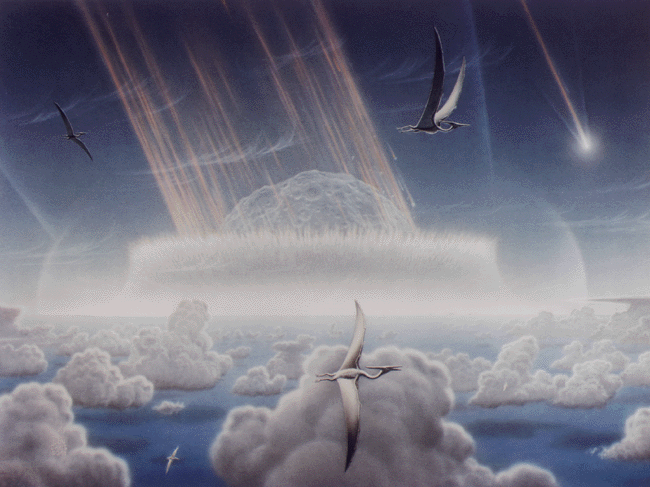
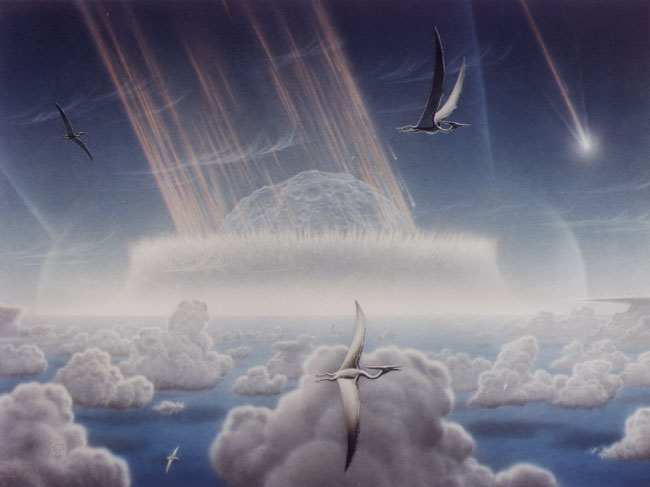
A large body of scientific evidence now exists that support the hypothesis that a major asteroid or comet impact occurred in the Caribbean region at the boundary of the Cretaceous and Tertiary periods in Earth's geologic history. Such an impact is suspected to be responsible for the mass extinction of many floral and faunal species, including the large dinosaurs, that marked the end of the Cretaceous period. Until now, the remains of such an impact crater have escaped detection. The geohydrological feature (Cenote Ring) of Northwestern Yucatan, was discovered through NASA Ames Remote Sensing technology, and represents a prime candidate for the impact site of a global catastrophic event. |