|
COMETS EARTH JUPITER KUIPER BELT MARS MERCURY METEORITES NEPTUNE OORT CLOUD PLUTO SATURN SOLAR SYSTEM SPACE SUN URANUS VENUS ORDER PRINTS
PHOTO CATEGORIES SCIENCEVIEWS AMERICAN INDIAN AMPHIBIANS BIRDS BUGS FINE ART FOSSILS THE ISLANDS HISTORICAL PHOTOS MAMMALS OTHER PARKS PLANTS RELIGIOUS REPTILES SCIENCEVIEWS PRINTS
|
 |
Related Documents
Download Options
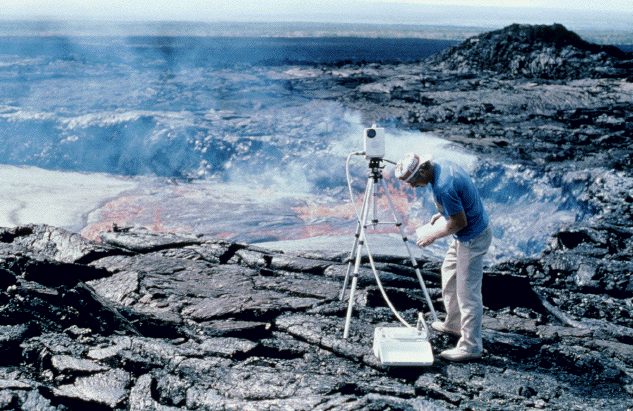
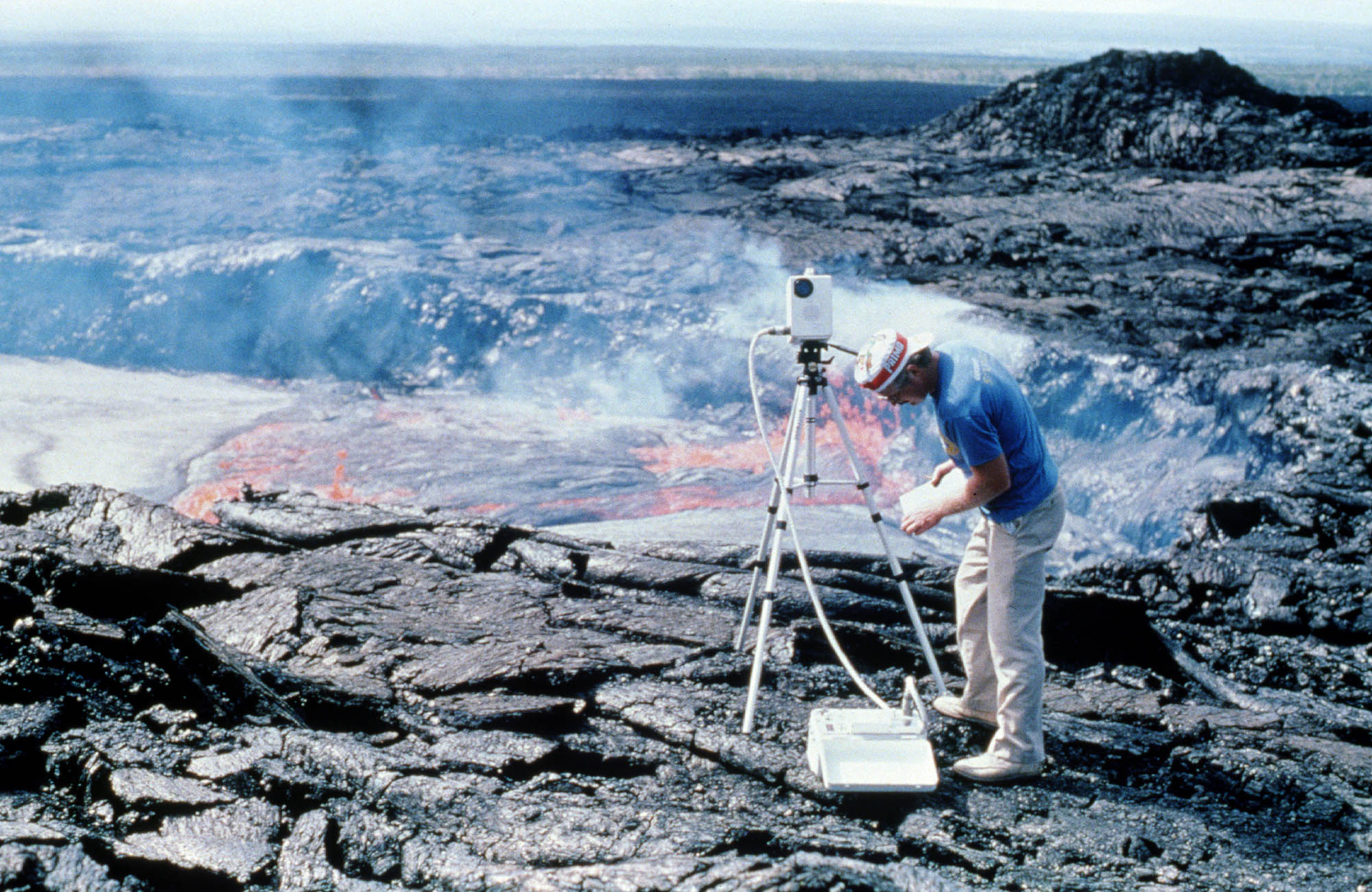
Using a spectroradiometer, scientists were able to measure the radiative temperature and thermal output from the Kupaianaha Lava Lake. This instrument collects spectra from 0.4-3.0 micrometers in over 800 channels, thereby permitting an accurate determination of the blackbody temperature of the surface. Such studies are of value because they show that the surface of a lava lake (or a lava flow) is remarkably cool - perhaps only a few hundred degrees centigrade - compared to the eruptive temperature of approximately 1,150°C (2,102°F). Such temperatures are quite similar to those the Voyager 1 spacecraft measured for the volcanic activity on Io, suggesting that silicate lavas, as opposed to molten sulfer, could exist within lava lakes on Io. |