|
COMETS EARTH JUPITER KUIPER BELT MARS MERCURY METEORITES NEPTUNE OORT CLOUD PLUTO SATURN SOLAR SYSTEM SPACE SUN URANUS VENUS ORDER PRINTS
PHOTO CATEGORIES SCIENCEVIEWS AMERICAN INDIAN AMPHIBIANS BIRDS BUGS FINE ART FOSSILS THE ISLANDS HISTORICAL PHOTOS MAMMALS OTHER PARKS PLANTS RELIGIOUS REPTILES SCIENCEVIEWS PRINTS
|
 |
Related Document
Download Options
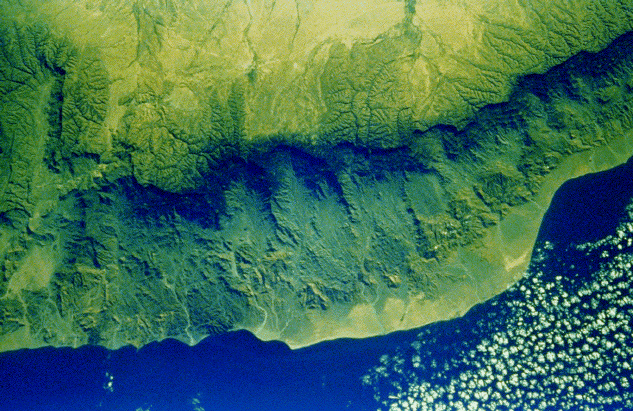
Prior to the opening of the Red Sea and the separation of Arabia and Africa, the site of the future ocean was marked by regional doming, rifting, and effusion of basaltic lavas. A thick pile of dissected basalt is visible in this photograph of the north coast of Somalia, which originally joined the south coast of Arabia. The lavas from a conspicuous, dark sequence with four or five topographic steps and their upper surface exhibits a prominent paleo-drainage pattern. An unconformity separates the basalts from the underlying Precambrian basement gneisses. The photograph also reveals the hot climate and harsh desert terrain of the Somali Republic. Nothing grows on the coastal strip where rain rarely falls. The land rises in steps to a highland plateau. At an elevation of 1,500 meters (4,922 feet) the climate is more pleasant than on the coast but, at a latitude only 10° from the equator, the sun is blistering and only scrub can survive. |