|
COMETS EARTH JUPITER KUIPER BELT MARS MERCURY METEORITES NEPTUNE OORT CLOUD PLUTO SATURN SOLAR SYSTEM SPACE SUN URANUS VENUS ORDER PRINTS
PHOTO CATEGORIES SCIENCEVIEWS AMERICAN INDIAN AMPHIBIANS BIRDS BUGS FINE ART FOSSILS THE ISLANDS HISTORICAL PHOTOS MAMMALS OTHER PARKS PLANTS RELIGIOUS REPTILES SCIENCEVIEWS PRINTS
|
 |
Related Documents
Download Options
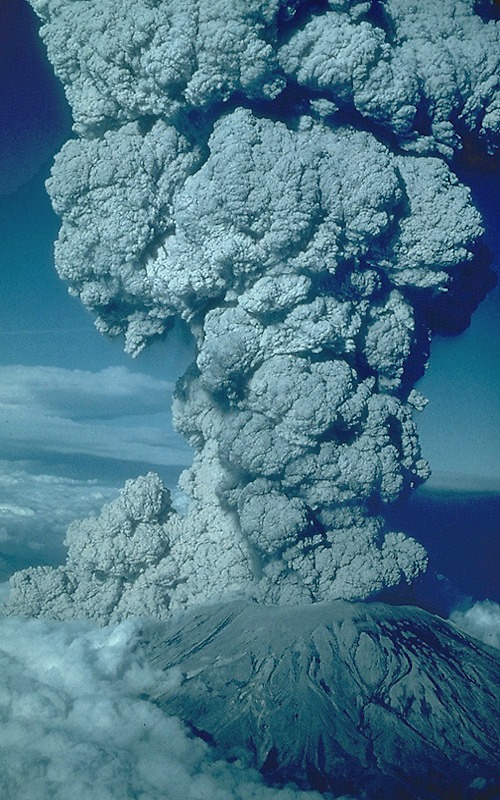
This image shows Mount St. Helens, 5 minutes into eruption onset on July 22, 1980. It was taken by J.W. Vallance from a helicopter between 6:25 and 6:31 p.m. The vertical eruption column of ash and pumice rises directly from the crater, whereas the ash cloud rising through the white clouds in the background rises from a pyroclastic flow that is rushing down the north flank of the volcano. The pyroclastic flow was generated by the collapse of a "fountain" of erupting magma. The fountain was a sustained event that increased in intensity over a period of many seconds, like a huge garden hose pointed upward and whose water pressure is gradually increased. Pumice fragments from the "fountain" then fell to the crater floor and formed a fast-moving pyroclastic flow. Viewed from the southeast, the pyroclastic flow is clearly separate from the darker vertical eruption column. Apparently, the dark color reflects a greater proportion of ash, suggesting that more of the erupting magma was being fed preferentially into the vertical column rather than being fed into the pyroclastic flow. |